FCAW / Flux-Cored Wire Process (136) — Complete Guide
Introduction
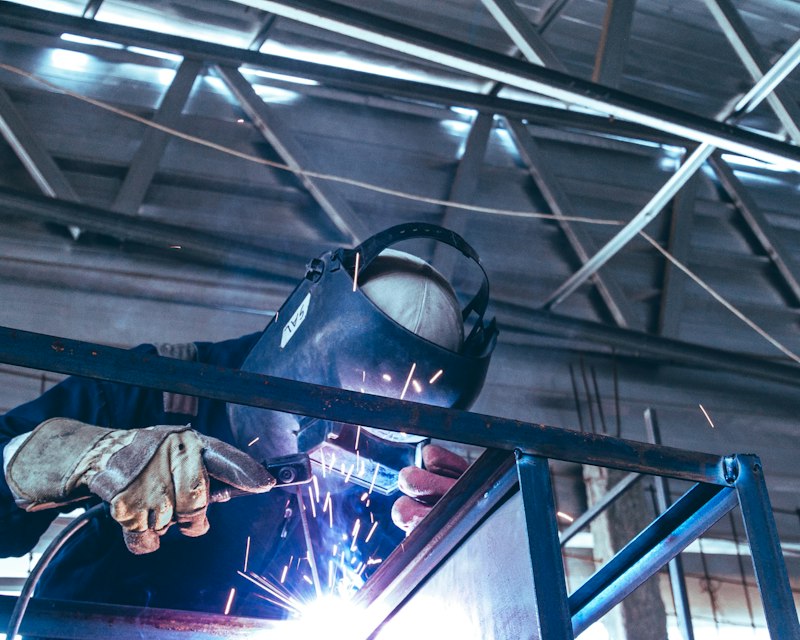
FCAW (Flux-Cored Arc Welding), process 136 (ISO 4063), uses a tubular wire with internal flux instead of solid wire. It combines MIG/MAG productivity with metallurgical benefits of SMAW.
---
Process Numbers
| ISO No. | Description |
|---|---|
| 136 | MAG with flux-cored wire + external gas |
| 138 | MAG with metal-cored wire |
| 114 | Self-shielded FCAW (no external gas) |
---
Wire Types
| Type | Slag | Characteristics |
|---|---|---|
| Rutile (T1, T9) | Fluid, easy removal | Good appearance, all positions |
| Basic (T5) | Dense | Better mechanical properties, low H₂ |
| Metal-cored (T15) | Negligible | Highest deposition rate |
---
FCAW vs. MIG/MAG vs. SMAW
| Feature | SMAW (111) | MIG/MAG (135) | FCAW (136) |
|---|---|---|---|
| Deposition rate | Low | Medium-high | High |
| Slag | Yes | No | Yes |
| Wind sensitivity | Low | High | Medium |
| Automation | Difficult | Easy | Easy |
| Duty cycle | ~30% | ~60% | ~60% |
---
Applications
Shipbuilding, offshore platforms, heavy structures, pressure equipment, hardfacing, industrial repair.
---
Reference Manufacturers
Leading manufacturers of flux-cored wires and FCAW equipment include Lincoln Electric (Innershield, Outershield series), ESAB (Dual Shield, Coreshield series), voestalpine Böhler Welding and Hobart.
---
*Article based on EN ISO 17632, AWS A5.20. Published on WeldFC Academy.*